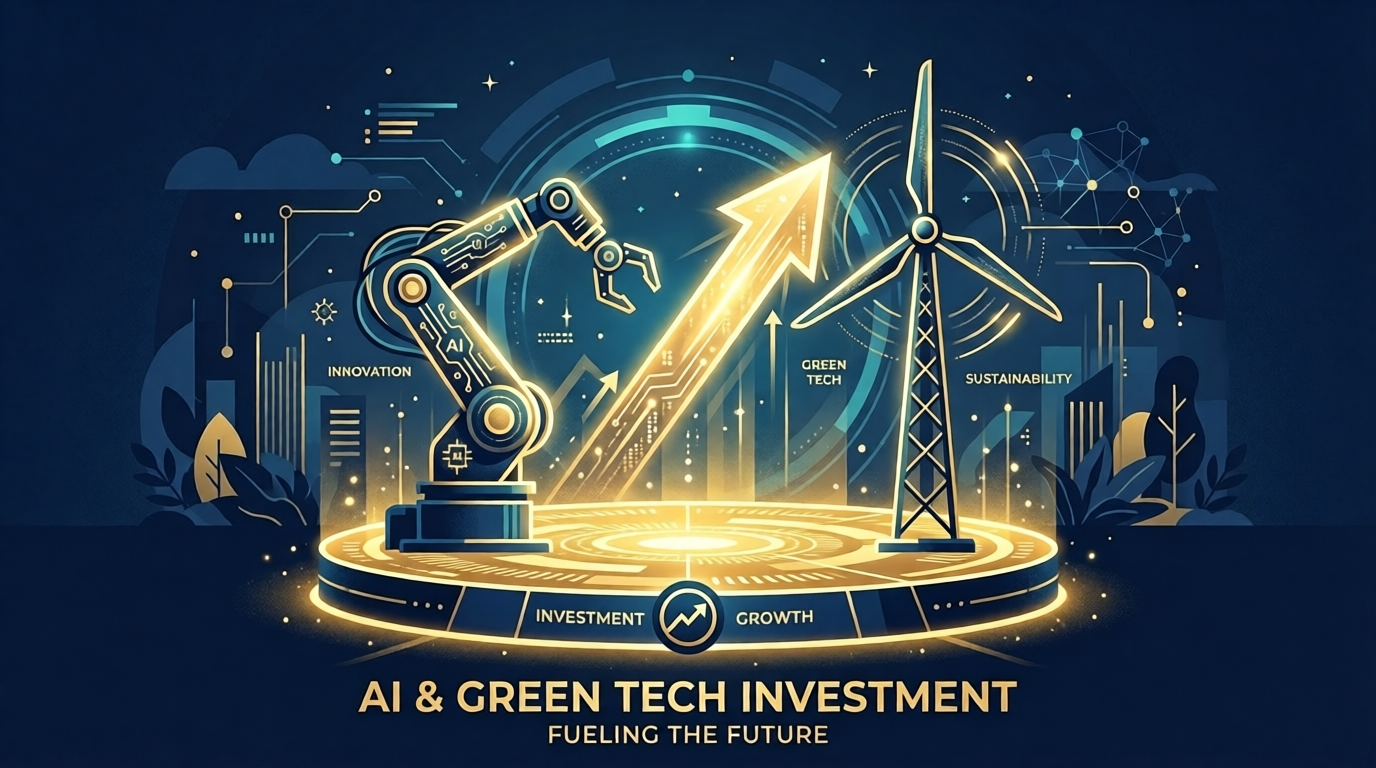
In 2026, investment conversations are increasingly centered on AI-driven automation and the energy transition. From manufacturing floor robots to AI-enhanced logistics, and from solar and wind to next-gen batteries and grid tech, these themes promise productivity gains, cost reductions, and new growth levers. For U.S. investors and peers in top-earning nations, the opportunity isn’t just about tech prestige—it’s about sustainable, scalable returns over the next decade.

Market thesis: why now
- AI and automation are improving margins and output across sectors, accelerating digital transformation in services, retail, healthcare, and manufacturing.
- The energy transition is accelerating policy support, corporate commitments, and consumer adoption of clean energy, storage, and electrification.
- Global supply chains are reshaping with AI-enabled optimization, requiring semiconductors, edge computing, and advanced materials—creating multi-year demand streams.
- Interest in ESG and responsible growth aligns with tech-enabled efficiency and climate mitigation, attracting institutional capital.
Investment playbooks
- Equities: AI, automation, and green tech leaders
- AI platform and software leaders: Companies delivering AI infrastructure, cloud-based AI services, and enterprise automation.
- Robotics and automation names: Industrial robots, warehouse automation, and autonomous systems benefiting from efficiency needs.
- Clean energy and storage: Solar, wind, green hydrogen, battery technology, and grid modernization players.
- ETFs and index funds: thematic exposure with diversification
- Thematic AI/Automation ETFs: Broad exposure to AI, robotics, and automation themes.
- Clean energy and storage ETFs: Diversified access to solar, wind, energy storage, and smart grid beneficiaries.
- Broad tech or growth ETFs: For risk-managed allocations with quality growth exposure.
- Bonds and alternatives: diversify and hedge risk
- Inflation-protected or short-duration government/corporate bonds to balance equity risk.
- Include select commodity or yield-oriented strategies if aligned with energy transition beneficiaries.
- Small-cap and international exposure: capture global momentum
- Small-cap AI/automation names can offer outsized gains but with higher risk; balance with larger-cap stability.
- International exposure to EU and Asian leaders in semiconductor equipment, AI startups, and green tech manufacturing.
Top picks for 2026 (illustrative; verify current data)
Note: Replace with current tickers and up-to-date research before publishing.
- U.S. AI/Automation leaders
- Large-cap AI infrastructure and cloud players showing steady AI services growth.
- Robotics/process automation specialists benefiting from logistics and manufacturing modernization.
- Green tech and energy storage
- Solar and wind developers with scale and project-backlog.
- Battery makers and battery materials suppliers with improving supply chains.
- International exposure
- EU tech and energy transition names with regulatory clarity and green funding.
- Asian semiconductor tooling and AI software firms benefiting from regional demand.
Risk considerations and due diligence
- Valuation risk: AI/tech growth names can trade at premium; use disciplined valuation and scenario planning.
- Execution risk: AI and automation depend on labor, supply chains, and policy support.
- Policy risk: Regulatory changes around AI ethics, data privacy, subsidies, and trade.
- Market cycles: Tech sectors are cyclical; maintain diversification and risk controls.
- Currency risk: Global exposure introduces FX considerations; use hedges where appropriate.
How to build a resilient, diversified strategy
- Define risk tolerance and time horizon (e.g., 5–10+ years).
- Create a core-satellite plan: core exposure to broad tech/AI/green energy themes, with satellite picks for specific conviction ideas.
- Regular rebalancing: quarterly or semi-annual reviews; adjust for fundamentals, not emotions.
- Use dollar-cost averaging: invest fixed amounts periodically to smooth volatility.
- Tax efficiency: consider tax-advantaged accounts and long-term holdings.

Practical steps to get started
- Step 1: Research and define your theme allocation (e.g., 40% AI/Automation, 30% Green Tech/Storage, 20% ETFs, 10% International).
- Step 2: Select 3–5 core holdings and 2–3 thematic ETFs.
- Step 3: Set price targets and stop-loss rules aligned with your risk tolerance.
- Step 4: Open or consolidate accounts for tax efficiency and simplicity.
- Step 5: Monitor macro trends and quarterly earnings signals; adjust as needed.
Conclusion
AI-driven automation and the energy transition are shaping investment opportunities across the United States and leading global markets. By combining thematic exposure with disciplined risk management and a clear time horizon, investors can position themselves to benefit from productivity gains, improved energy efficiency, and the evolution of modern economies.


Leave a Reply